

Minimally Invasive Precise Lipolysis for Face and Body Contouring vs Alternatives: ENDO ONE on Tissue Targeting
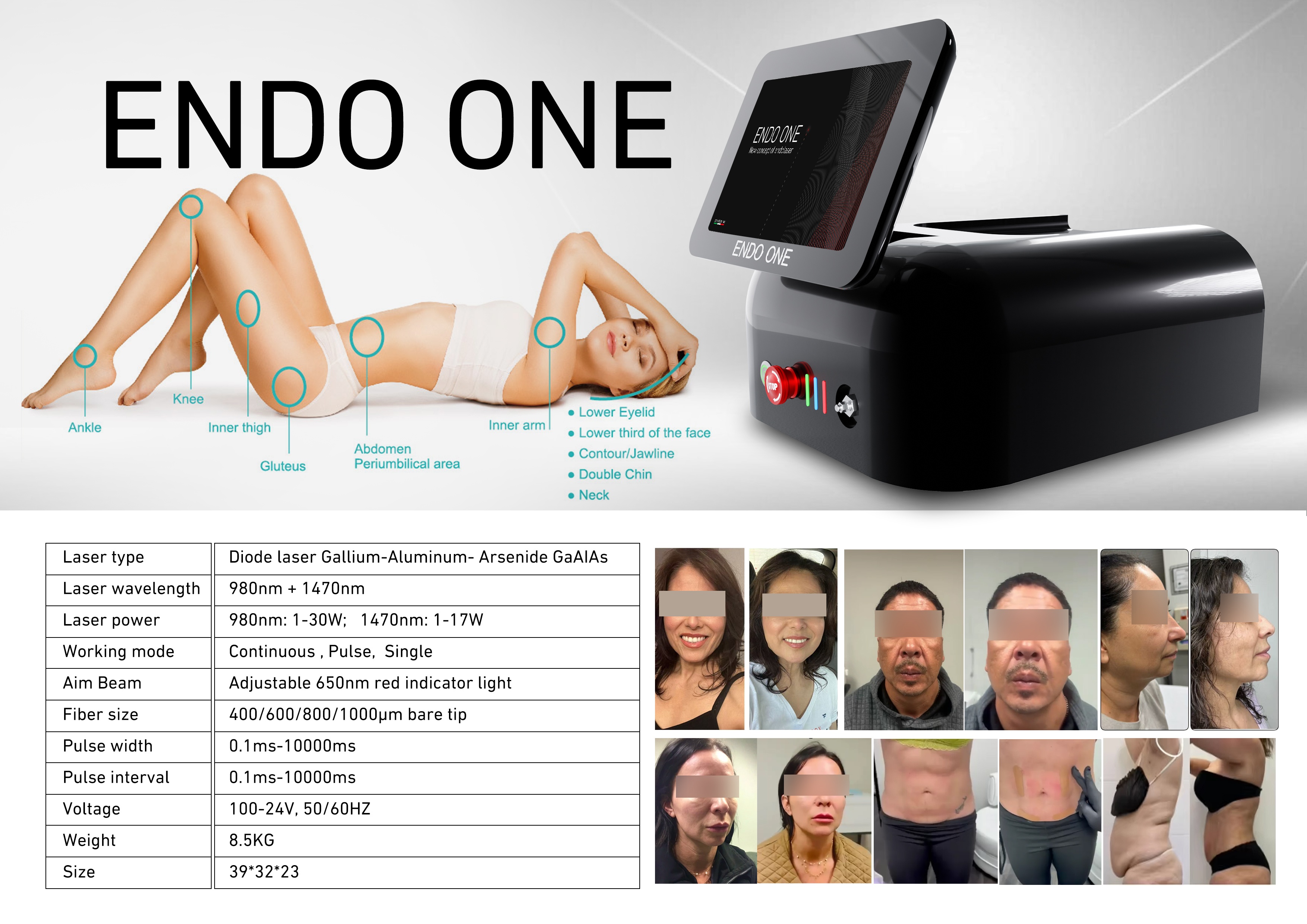
The ENDO ONE diode endolaser platform, manufactured in Italy by ENDO ONE SRL, delivers a targeted photothermal solution engineered specifically for high-precision contouring. By introducing bare-tip optical micro-fibers directly into targeted adipose compartments, the system combines selective adipocyte membrane emulsification with simultaneous fibroseptal tightening. Evaluating the biophysical mechanisms and clinical outcomes of endolaser lipolysis against surgical and non-invasive alternatives enables aesthetic facilities to select the optimal technology for their practice.
The Clinical Spectrum of Fat Reduction: Surgical, Non-Invasive, and Laser Approaches
Modern body and facial contouring encompasses three primary technological categories: traditional mechanical suction-assisted liposuction, non-invasive transcutaneous fat-reduction devices, and minimally invasive laser-assisted lipolysis. Each modality operates through distinct physical mechanisms that dictate clinical capabilities and recovery profiles.
A thorough understanding of these procedural differences clarifies why laser-assisted lipolysis provides superior outcomes in small-to-moderate volume contouring cases where tissue retraction is paramount.
Mechanical Trauma and Skin Laxity in Traditional Suction Liposuction
Traditional suction-assisted liposuction relies on blunt metal cannulas connected to high-vacuum suction systems. The surgeon manually forces the cannula through subcutaneous fat beds, mechanically tearing adipose lobules from their surrounding connective tissue scaffold.
While mechanical liposuction excels at debulking large fat volumes exceeding one liter, this physical avulsion carries substantial clinical drawbacks. Cannula motion tears subcutaneous blood vessels, causing extensive intraoperative hemorrhage, severe post-operative hematomas, and prolonged ecchymosis. Most critically, mechanical evacuation leaves the overlying skin envelope unaffected. When underlying fat volume is abruptly removed, the stretched skin frequently collapses into lax, irregular folds, often requiring secondary excisional surgery to correct cutaneous redundancy.
Volumetric and Targeting Limits of Non-Invasive Surface Modalities
Non-invasive transcutaneous modalities, including cryolipolysis, external high-intensity focused ultrasound, and surface radiofrequency, seek to induce non-traumatic adipocyte apoptosis through the skin barrier. While these platforms appeal to patients seeking zero downtime, their clinical limitations are well-documented.
Surface cooling or acoustic waves cannot be directionally steered within specific subcutaneous planes. Energy distribution is diffuse, achieving modest, unpredictable fat reduction of twenty to twenty-five percent within the treated cup area after several months. Furthermore, surface modalities cannot sculpt crisp anatomical borders, such as the mandibular margin or lateral cheek, nor can they trigger substantial fibroseptal retraction. Patients with localized adiposity combined with skin laxity often experience disappointing results from purely non-invasive treatments.
Photothermal Mechanisms of 980 Nanometer Laser-Assisted Lipolysis
Laser-assisted lipolysis overcomes the limitations of mechanical trauma and surface dissipation through targeted chromophore absorption. The platform utilizes a dedicated 980 nanometer diode laser wavelength that matches key absorption bands in human fat and blood.
Delivering optical energy through micro-fibers directly into adipose compartments converts light into controlled thermal energy, initiating simultaneous fat liquefaction and vascular photocoagulation.
Selective Adipocyte Membrane Disruption and Emulsification
Adipose tissue is composed of mature adipocytes containing large intracellular lipid droplets. When the 980 nanometer laser beam strikes adipose tissue, the optical energy is absorbed by intracellular lipids and interstitial fluid, generating localized temperatures between 50 and 65 degrees Celsius.
This rapid thermal elevation disrupts the delicate phospholipid cell membranes of adipocytes, releasing intracellular triglycerides into the extracellular space. The solid fat matrix is converted into a low-viscosity, oily emulsion. This gentle photothermal emulsification preserves the structural fibroseptal network and major nerve branches, avoiding the mechanical shearing and tissue avulsion characteristic of traditional liposuction cannulas.
Microvascular Coagulation for Reduced Ecchymosis and Swelling
A primary clinical advantage of 980 nanometer laser lipolysis is its affinity for hemoglobin. As the optical fiber advances through the fat bed, photothermal energy coagulates microvascular capillaries up to one millimeter in diameter.
Instant vascular sealing prevents intraoperative bleeding and minimizes the formation of subcutaneous hematomas. Clinical studies, including the landmark retrospective analysis of 534 procedures by Reynaud and colleagues in Aesthetic Plastic Surgery, document significantly reduced post-operative ecchymosis, edema, and discomfort compared to mechanical liposuction. Patients benefit from a cleaner, safer surgical field and substantially faster recovery timelines.
Comparative Evaluation of Contouring Alternatives Across Clinical Criteria
Practices must evaluate contouring alternatives across four critical clinical parameters. Clinical evaluation focuses on tissue volume, skin retraction, recovery speed, and facility requirements.
Adipose Targeting Volume: Mechanical liposuction is suited for debulking large volumes (>1000 mL); non-invasive cryolipolysis targets subtle, localized bulges; laser-assisted lipolysis provides pinpoint precision for small-to-moderate volumes (20–500 mL) where fine anatomical sculpting is paramount.
Overlying Skin Retraction: Traditional liposuction provides negligible skin retraction and often worsens laxity. In contrast, endolaser lipolysis delivers profound immediate and delayed tissue contraction by heating both the reticular dermis and subcutaneous septa.
Patient Recovery and Downtime: Suction liposuction requires two to four weeks of recovery with mandatory compression. Endolaser procedures require only forty-eight to seventy-two hours of social recovery under local tumescent anesthesia.
Surgical Facility Requirements: Traditional liposuction often demands general anesthesia in hospital operating suites; endolaser lipolysis is performed safely in outpatient clinic procedure rooms under local tumescent anesthesia.
Procedural Decision Pathways: Metabolic Clearance Versus Active Micro-Aspiration
A clinical decision in laser lipolysis involves determining whether emulsified adipose tissue should be actively aspirated or left for endogenous metabolic clearance. The treating physician tailors this pathway based on anatomical location and total emulsified volume.
When treating delicate facial zones, such as the pre-jowl sulcus or submental fat pad where emulsified volumes typically remain below twenty to thirty milliliters, active aspiration is unnecessary. The low-viscosity emulsion is readily broken down by tissue enzymes, engulfed by macrophages, and cleared through normal lymphatic pathways over four to eight weeks.
Conversely, when contouring larger body regions, such as the lower abdomen, flanks, or inner thighs where emulsified fat exceeds fifty to one hundred milliliters, clinicians perform gentle, low-pressure micro-aspiration following laser emission. Evacuating the liquefied emulsion immediately refines contours, relieves tissue pressure, and accelerates overall recovery without damaging preserved structural septa.
Frequently Asked Questions About Laser Lipolysis and Tissue Targeting
How does 980 nanometer laser lipolysis prevent skin sagging after fat removal?
Laser lipolysis prevents post-procedural skin sagging by concurrently heating the reticular dermis and the fibroseptal network. The emitted thermal energy stimulates instant collagen contraction while triggering delayed neocollagenesis, ensuring the skin envelope shrinks tightly over the reduced adipose contour.
What optical fiber sizes are utilized during laser-assisted lipolysis?
Clinicians utilize 400 micrometer fibers for delicate facial sculpting, 600 micrometer fibers for the submentum and neck, and 800 to 1000 micrometer fibers for denser abdominal, flank, and thigh fat compartments. Matching fiber diameter to tissue resistance ensures smooth vectoring and uniform energy delivery.
Can laser lipolysis treat previously liposuctioned areas with contour irregularities?
The platform is exceptionally well-suited for secondary revision procedures. The fine optical fiber smoothly navigates fibrotic, uneven fat beds from prior mechanical liposuction, liquefying localized residual fat pockets and tightening scarred septa to restore smooth, symmetrical contours.
Is patient hospitalization required for laser-assisted lipolysis?
Laser-assisted lipolysis is executed entirely as an outpatient procedure under local tumescent anesthesia. Patients remain awake and comfortable throughout the treatment, resting briefly following the procedure before being discharged home the same day.
How quickly are definitive clinical contouring outcomes visible?
Patients observe immediate contour refinement due to fat liquefaction and acute tissue contraction. Definitive, refined contours stabilize between three and six months as macrophage clearance completes and newly synthesized collagen networks mature within the treated tissue planes.
Elevating Contouring Results with Targeted Diode Laser Lipolysis
Offering minimally invasive precise lipolysis for face and body contouring equips modern aesthetic practices to deliver crisp, sculpted body and facial contours with outpatient safety and rapid patient recovery. Bypassing mechanical trauma in favor of selective photothermal targeting establishes an advanced standard of care that expands practice revenue and patient satisfaction.
Surgical directors and aesthetic practitioners seeking comprehensive lipolysis parameter guidelines, procedural protocols, and equipment demonstrations can submit formal requests through the official consultation portal. Clinical specialists provide detailed device overviews, consumable fiber logistics, and practice integration consultation tailored to professional aesthetic surgical clinics. Discover full technical specifications and schedule an evaluation session at https://www.endo-one-prime.com/.
ENDO ONE SRL
ENDO ONE SRL
email us here
Legal Disclaimer:
EIN Presswire provides this news content "as is" without warranty of any kind. We do not accept any responsibility or liability for the accuracy, content, images, videos, licenses, completeness, legality, or reliability of the information contained in this article. If you have any complaints or copyright issues related to this article, kindly contact the author above.
